
RFID and Barcode Training Course
- Home >
- vocational-training >
- barcode rfid
Understand how radio frequency identification (RFID) and barcode systems identify, track, and manage items in real operations.
This online self-study course starts with automatic identification basics, then explains tags, readers, RFID physics, middleware, standards, security, and privacy. Animations and simulations help make technical concepts easier to understand.
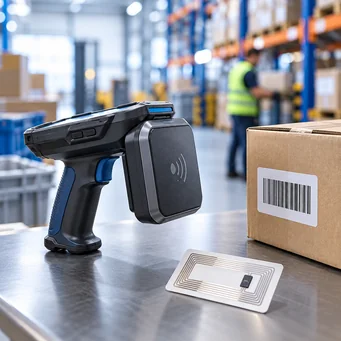
Learn RFID technology at your own pace
RFID is used in manufacturing, logistics, shipping, healthcare, and other industries. This course helps technical professionals understand how the technology works and where it can support identification, tracking, and operational efficiency, without requiring complex mathematics.
Who this course is for
- Engineers and technicians working with automatic identification systems
- Supply chain, logistics, and inventory professionals evaluating RFID applications
- Students and professionals who want an introduction to RFID and barcode technology
What the online course includes
- Self-study lessons with animations, simulations, graphics, and photographs
- Access from a PC, laptop, Mac, or tablet
- A self-assessment test and an associated certification exam
- A lifelong-valid certificate and electronic badge after passing the exam
The purchase below is for the online course, with one year of access for one learner. Internet access is needed for online learning. For workstation or network-version pricing and details, contact BIN95.
Connect RFID concepts to practical applications
Explore how RFID is applied to identification and tracking through examples such as:
- Pharmaceutical supply chain tracking
- Container tracking in a yard
- Hospital patient identification and tracking
- Airline baggage handling
- Car parking access control and hotel or resort applications
Compare RFID with barcodes, understand active, passive, and semi-passive tags, and examine the advantages, limitations, security risks, and privacy considerations of RFID systems.
Check your current RFID knowledge
Use the free RFID assessment to check your existing knowledge before deciding whether this course fits your training needs.
Includes approximately eight hours of self-study learning (8 PDH), one year of online access, and the exam and certification package.
Within 24 hours of ordering, you will receive an email with access information.
The $199 online purchase is for one learner with one year of access. Contact BIN95 for workstation or network-version pricing and details, or to discuss training for multiple learners.
See examples from the RFID course
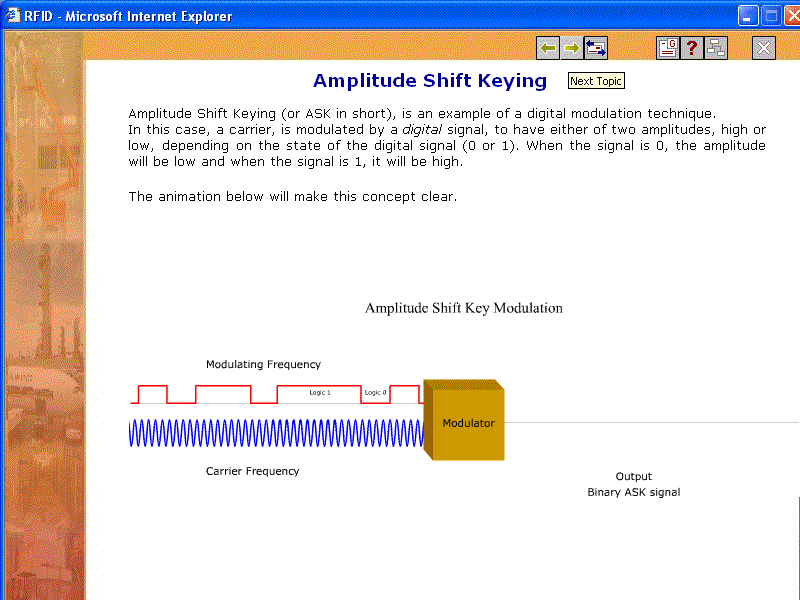
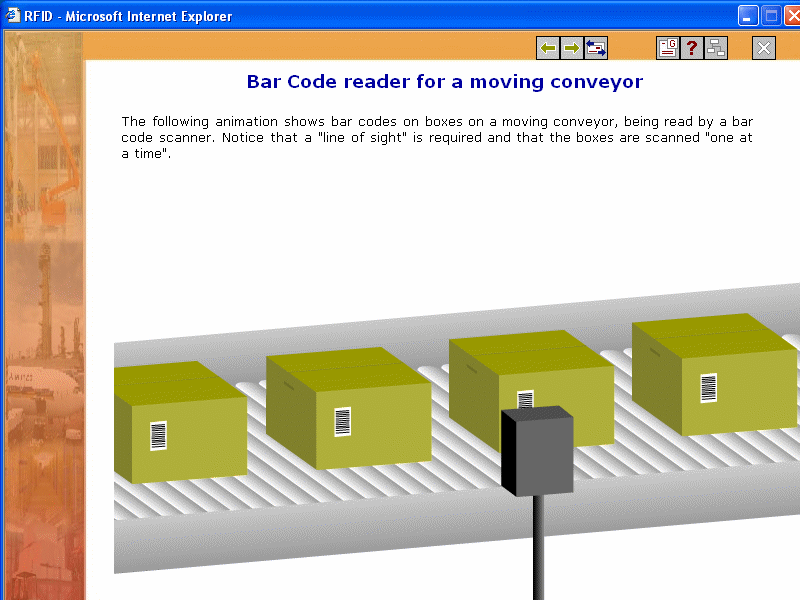
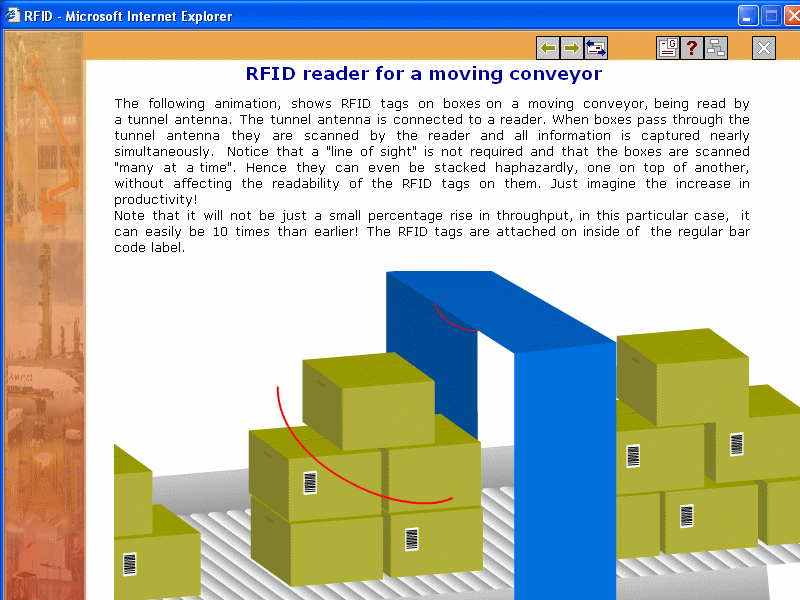
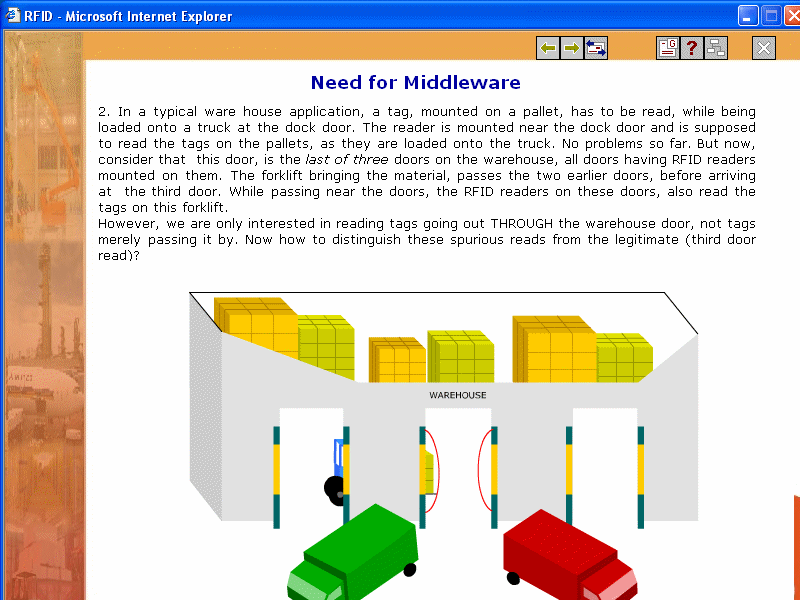
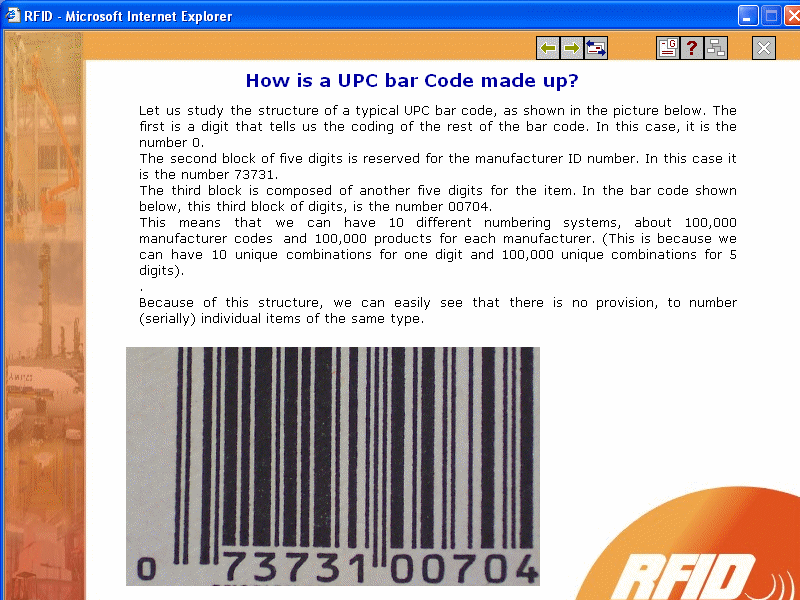
These static screenshots illustrate course topics. The actual course includes animations and explanations. Select an image to inspect its detail.
RFID course contents
The course covers six subject areas: basic concepts, RFID physics, RFID systems, middleware and standards, applications, and security and privacy. Expand the outlines below to see the supplied lesson topics.
RFID systems: Learn about tags, readers, and how RFID systems compare with barcode identification. Examples of these topics are listed in the basic concepts outline.
Basic concepts
- Introduction to RFID
- A modern history of RFID
- An attractive technology
- Automatic identification
- Bar codes-1
- Bar codes-2
- Bar codes-3
- Matrix bar code
- Use of automatic identification
- What does a bar code reveal?
- Do bar codes follow any standards?
- How is a UPC barcode made up?
- What is a tag?
- Active, passive & semi-passive tags
- More RFID tags
- What does an RFID reader read?
- How is an RFID tag different from a bar code?-1
- How is an RFID tag different from a bar code?-2
- How is an RFID tag different from a bar code?-3
- RFID systems
- Some advantages of RFID over bar codes
- Bar code reader for a moving conveyor
- RFID reader for a moving conveyor
- Anti counterfeiting-1
- Anti counterfeiting-2
- Further advantages
- Disadvantages of RFID
- Summary of basic concepts
RFID physics
- RFID physics- module outline
- What are waves?
- Development of a wave-1
- Development of a wave-2
- Parts of a wave
- Electricity & magnetism
- A practical experiment
- Ampère’s law and Biot–Savart’s law
- Maxwell's findings
- Electromagnetic waves
- The electromagnetic spectrum
- An electromagnetic wave
- A transformer
- Basic radio communication
- A radio communication system-1
- A radio communication system-2
- Antennas
- Half wave dipole
- Magnetic & electric fields around antennas
- Near field & far field
- What is resonance?
- A basic radio tuner
- How does a radio receiver work?
- Modulation
- Frequency modulation
- Digital modulation
- An example of digital modulation
- Amplitude shift keying
- Frequency shift keying
- Data transmission by radio
Middleware and standards
- What is middleware?
- Need for middleware-1
- Need for middleware-2
- Need for middleware-3
- Functions of middleware
- What is a savant?
- Middleware architecture-1
- Middleware architecture-2
- EPCglobal
- Electronic product code
- What is EPCIS?
- Object naming service
- What is an epc tag?
- How will the system work?
- Summary
- Standards in RFID
- The air interface protocol
- Standards in RFID
- Standards laid by ISO
- Summary
RFID applications
- RFID applications
- Pharma supply chain-1
- Pharma supply chain-2
- Container tracking in a yard-1
- Container tracking in a yard-2
- Hospital patient identification & tracking-1
- Hospital patient identification & tracking-2
- Airline baggage handling-1
- Airline baggage handling-2
- Airline baggage handling-3
- Summary of applications
RFID security and privacy
- Security issues in RFID-1
- Security issues in RFID-2
- Security issues in RFID-3
- Security issues in RFID-4
- Eavesdropping
- Summary of RFID security
- Privacy issues in RFID
- Example of privacy invasion
- Privacy protection
- Use of a blocker tag
- Blocker tag disadvantages
- Killing tags
- Faraday cage
- Tracking with RFID
- Summary of privacy issues
- Conclusion
Course reference (ESBN): A92-0150-2B36-06B3.
RFID training questions
Is this RFID course suitable for beginners?
Yes. The course starts with barcode readers and automatic identification basics, then explains RFID technology and its applications without requiring complex mathematics.
What does the RFID training cover?
The course covers barcodes, RFID tags and readers, RFID physics, middleware and standards, real-world applications, security, and privacy.
How long does the course take, and how long is access available?
The course provides approximately eight hours of self-study learning, earning eight PDH. The single-learner online purchase includes one year of access.
Can I take the online course on a Mac or tablet?
Yes. The online course can be accessed from a PC, laptop, Mac, or tablet with internet access.
Does the course include an exam and certificate?
Yes. The single-learner package includes an exam and certification. Pass the associated exam to earn a lifelong-valid certificate and an electronic badge you can display online.
When will I receive access after ordering?
BIN95 sends an email with access information within 24 hours of ordering.
Can I purchase training for multiple learners?
The $199 purchase on this page provides one year of online access for one learner. Contact BIN95 for workstation or network-version pricing and details, or to discuss training for multiple learners.
Related technical training
Have a question about the course? Contact BIN95.