
Sealing Threaded Connections Properly
Pipe thread identification, sealant selection, and reliable leak prevention
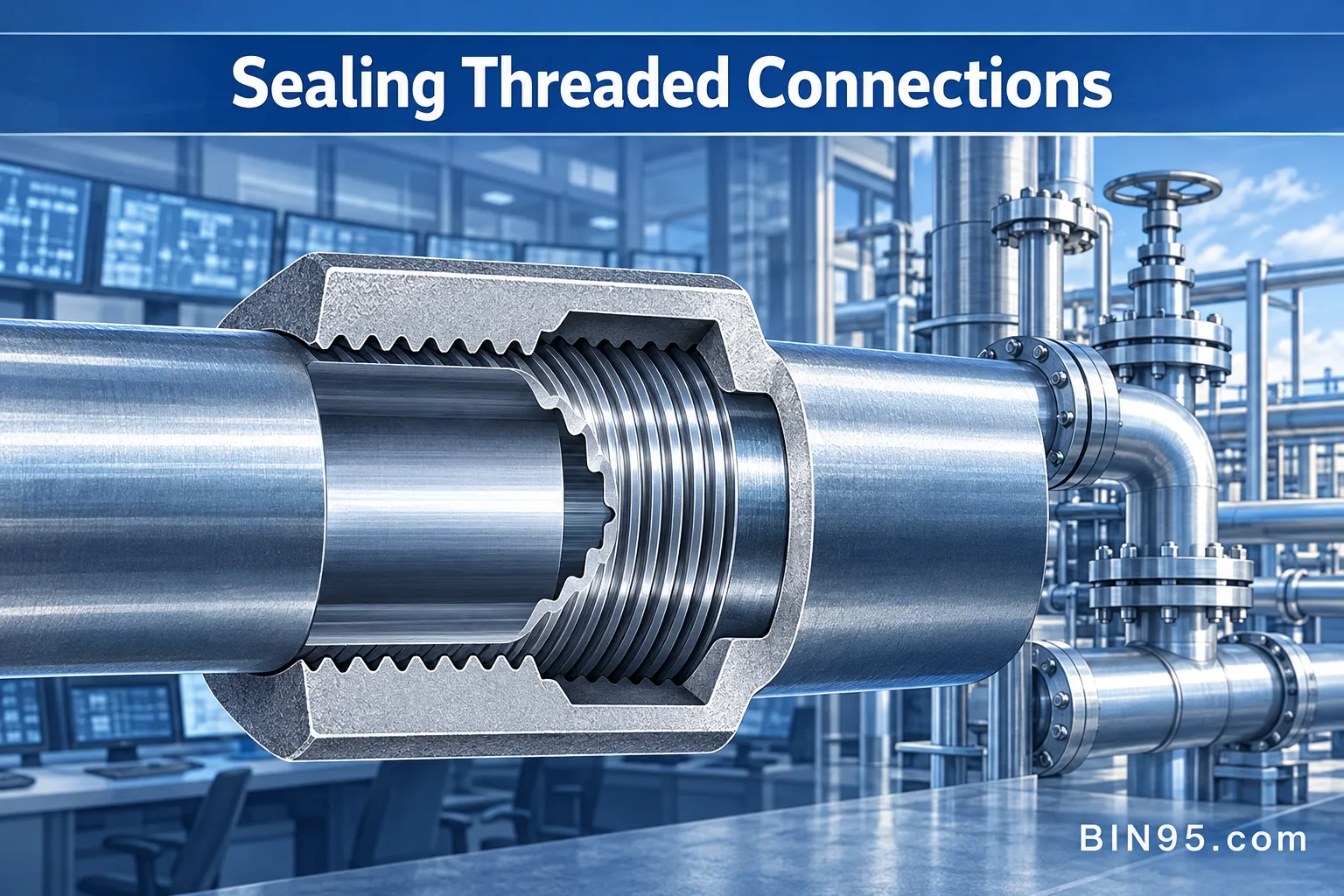
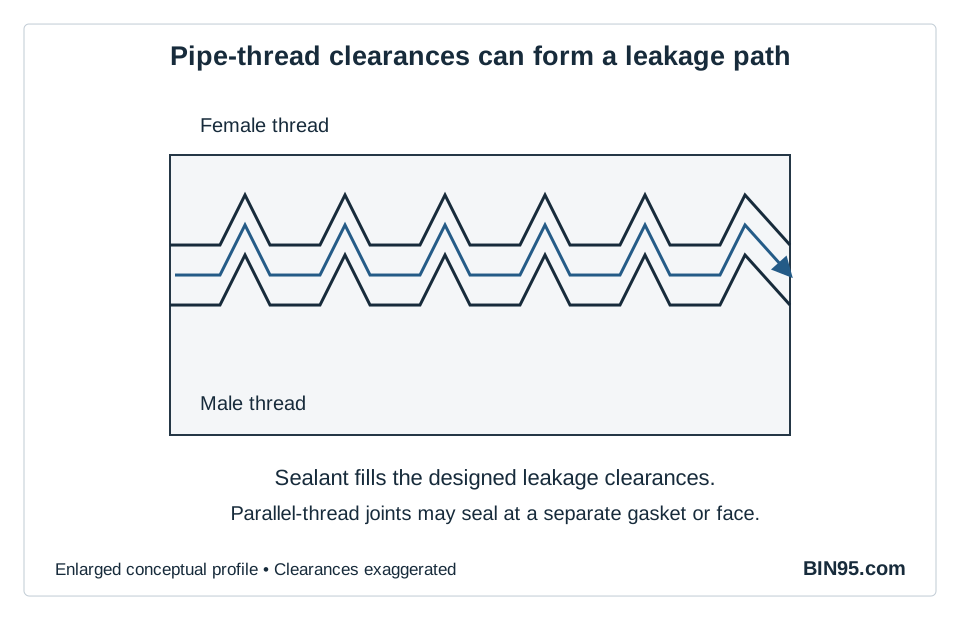
A threaded pipe joint can feel tight and still leak. Small clearances between thread crests, roots, and flanks can form a continuous path along the thread. Reliable sealing begins with identifying the connection design, then choosing compatible parts and the correct sealing method for the fluid, pressure, and temperature.
1. How Pipe Threads Hold and Seal
Threads convert rotation into axial movement. Once the connection seats or wedges, further turning loads the thread flanks and stresses the surrounding material. Excess tightening can strip threads, split a fitting, or damage a softer component before the joint becomes leak-tight.
Ordinary NPT tapered pipe threads rely on approved sealant to fill potential leakage paths. Parallel-thread connections commonly use a separate gasket, O-ring, bonded seal, or other designed sealing face. Putting tape on a parallel thread does not replace that missing seal. Identify where the connection is intended to seal before selecting a product.
2. Do Not Mix NPT and BSP Threads
Similar nominal pipe sizes do not establish compatibility. NPT and BSP forms differ in geometry; some sizes may start together but will not make the intended joint. Forcing mismatched parts damages the threads and can create a connection that fails later under vibration or temperature cycling.
Use thread identification tools and manufacturer drawings to confirm the standard, diameter, pitch, and taper. Where systems meet, use a purpose-made adapter with correctly identified ends. Nominal pipe sizes such as 1/2 in are designations, not the measured outside diameter of the threaded fitting.
3. Select the Sealant for the Service
A sealant must fill the intended clearances while tolerating the process environment. It must also allow the connection to be assembled as specified. Check chemical compatibility, pressure and temperature ratings, cure requirements, and any restrictions for potable water, oxygen, food processing, or instrument service.
| Selection question | Why it matters |
|---|---|
| Is this a thread-sealing connection? | Some connections seal at a separate face or gasket |
| Is the sealant compatible with the fluid and materials? | Incompatible compounds can degrade or contaminate the process |
| Is cure time required? | An uncured product may not be ready for the pressure test |
| Can fragments enter small passages? | Tape or excess compound can obstruct instrument ports |
| Must the joint be disassembled later? | Removal characteristics affect maintenance |
PTFE tape is useful in approved services, but it is not universal. Apply it in the manufacturer's specified direction and keep it back from the leading threads as instructed so loose material does not enter the line. Do not combine tape and paste unless the products and connection procedure allow it. Oxygen service requires specifically approved materials and cleanliness practices.
4. Mixed Materials and Plastic Fittings
A tapered metal male fitting can act as a wedge inside a plastic female fitting. Plastic creep and different thermal expansion rates can then relax the joint or create cracking. Use manufacturer-approved transitions and tightening instructions; extra wrench force is not a remedy for an unsuitable material combination.
Dissimilar metals can also corrode galvanically when an electrolyte is present. Chemical compatibility must cover both fittings and the sealant. Provide independent electrical bonding where required rather than relying on an assumed conductive path through a sealed thread.
5. Assemble Without Damaging the Joint
- Isolate, depressurize, and make the piping safe before opening a connection.
- Confirm the thread standard and inspect for corrosion, cross-threading, burrs, or cracks.
- Clean the threads using a method compatible with the service.
- Apply the approved sealant and assemble to the fitting manufacturer's instructions.
- Complete any required cure, then test under the approved piping test procedure.
Do not back off a tapered joint simply to align equipment unless its procedure explicitly permits that action. Repositioning may disturb the seal. Redesign the connection with a suitable union or adapter when alignment cannot be achieved correctly.
6. Test and Maintain the Connection
The ebook's single pressure-test multiplier is not a universal requirement. Test medium, pressure, duration, and precautions must come from the applicable piping code and an approved test plan. Pneumatic testing contains substantial stored energy; it requires a qualified procedure.
Use a compatible leak-detection solution or another approved method. If a joint leaks, depressurize before correcting it. Record recurring leaks and examine piping support, vibration, thermal movement, and fitting selection rather than repeatedly adding sealant.
For air-system leak surveys, see Compressed Air Waste Reduction.
Frequently Asked Questions
Can NPT and BSP fittings be joined directly?
Do not force them together. Identify both thread standards and use a correctly rated adapter where a transition is needed.
Does every threaded connection need PTFE tape?
No. Some connections seal at a gasket, O-ring, or separate face. Use the sealing method specified for the connection and service.
Should a leaking threaded joint be tightened while pressurized?
No. Isolate and depressurize it before repair, then test using the approved procedure.
Adapted from original work by Mike Sondalini, Maintenance Engineer.
Source and Further Learning
Original ebook section: Sealing threaded pipe connections.
- Industrial Valves Training — Course covering valve types, pressure relief devices, steam traps, and strainers.
- Equipment Maintenance Best Practice Guide — Further guidance on bolted joints, gaskets, and threaded connections.
Downloadable Version
Prefer a downloadable version? Get the full 72-page Process & Utilities Plant Essentials PDF below — ideal for employee or student handouts.
 Download right away in a printable PDF format!

$12.50