
Fired Packaged Boiler Basics
Burners, heat transfer, feedwater, blowdown, and dependable steam generation
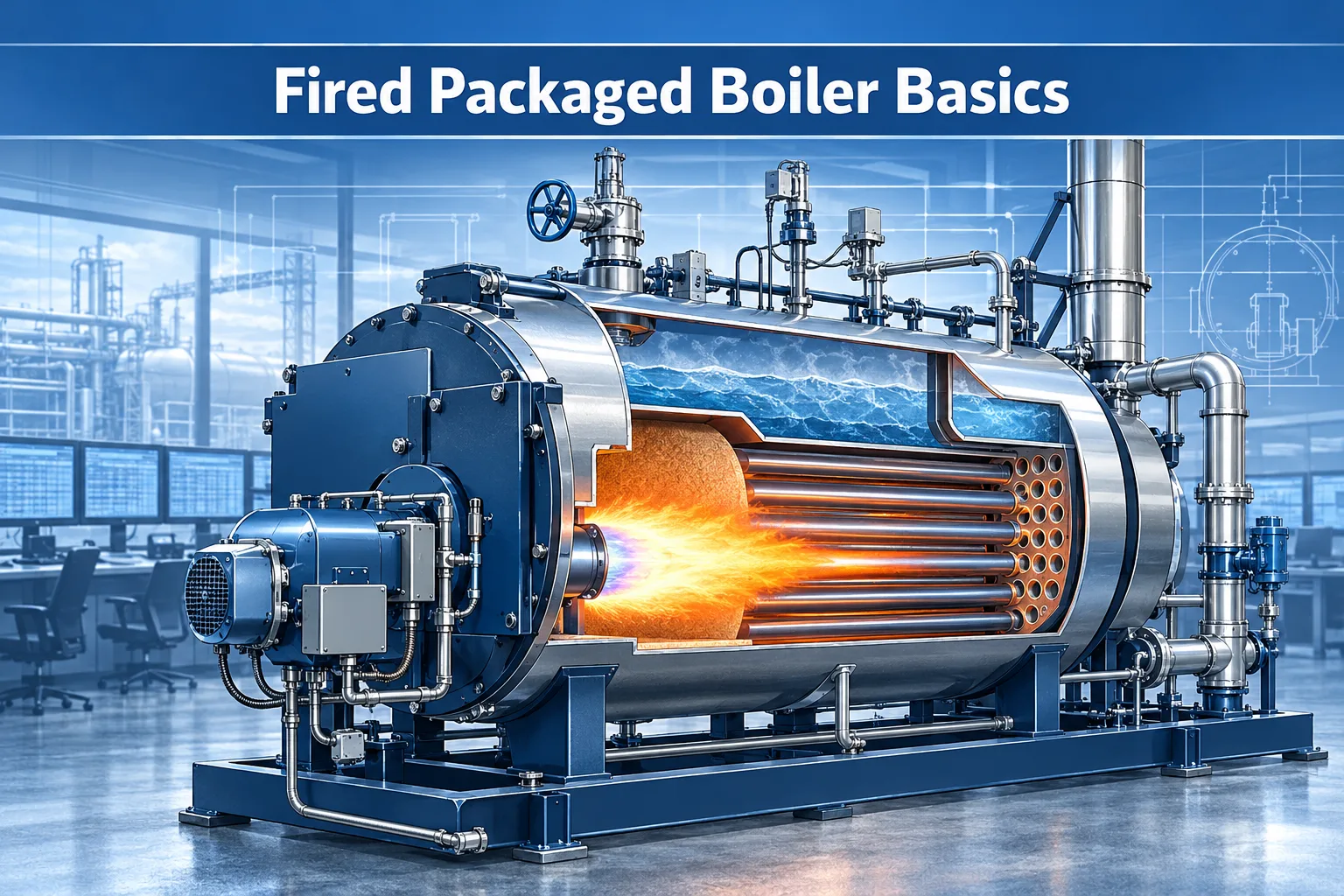
A fired packaged boiler converts fuel energy into steam by transferring heat through metal surfaces into water. The basic heat-exchanger idea is simple, but reliable operation depends on combustion, water level, feedwater quality, pressure control, and protective devices working together. This guide explains the equipment and operating issues described in the original ebook.
1. Follow the Heat From Burner to Steam
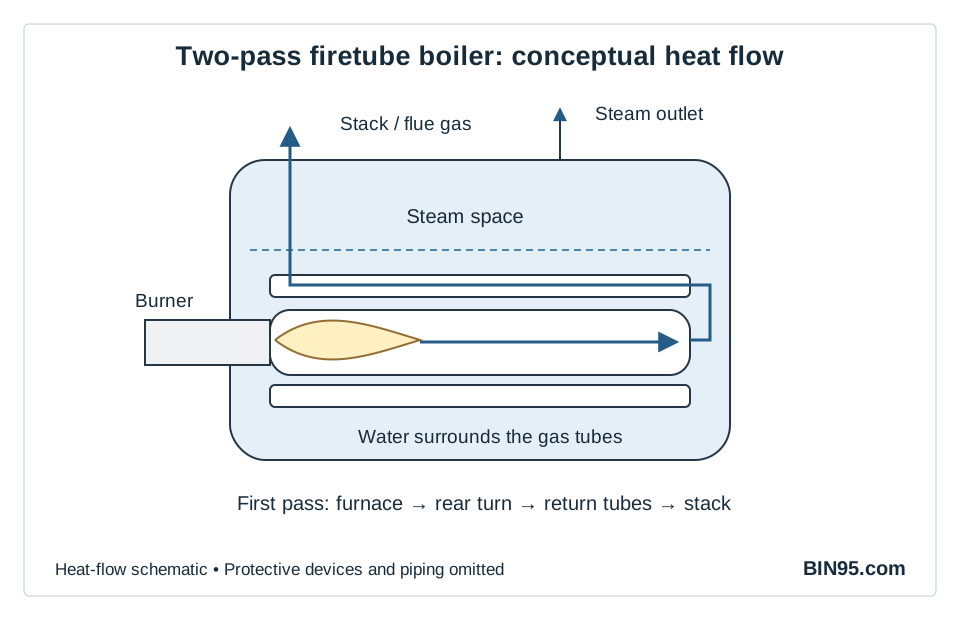
A burner mixes fuel and air to produce controlled combustion. Heat passes through the furnace and heating surfaces into the water. Steam separates into the steam space and leaves to serve the process. Combustion gases pass through the designed gas route before discharge through the stack.
| Boiler arrangement | What travels inside the tubes | What surrounds the tubes |
|---|---|---|
| Firetube | Hot combustion gases | Boiler water |
| Watertube | Water and/or steam-water mixture | Hot combustion gases |
Packaged units may use several gas passes to recover more heat before the gases leave the boiler. Efficiency depends on the specific design, fuel, load, excess air, fouling, and whether heat recovery is included. The ebook's approximate efficiency figure should not be treated as a rating for every installation.
2. Protect the Heat-Transfer Surfaces
Scale on the water side resists heat transfer. Deposits can cause local tube overheating even while the average steam output appears acceptable. Fireside fouling also reduces heat transfer and raises fuel demand. Tube and tube-sheet condition matter because uneven thermal expansion can stress joints and create leaks.
Warm the boiler gradually using the manufacturer's startup procedure. Rapid temperature changes create expansion differences between the shell, tubes, tube sheets, and refractory. Repeated thermal shock can shorten component life; a faster startup is not necessarily a lower-cost startup.
3. Feedwater Treatment Prevents Scale and Corrosion
Feedwater treatment must match the boiler design, pressure, makeup quality, and condensate return. Softening removes hardness-forming ions by ion exchange; demineralization removes a wider range of dissolved ions when required. Neither word alone specifies the complete treatment program.
A feedtank provides storage and a stable supply to the feed pumps. Preheating and appropriate deaeration reduce the burden of heating cold water and help control dissolved gases. Water-treatment specialists establish the required limits and chemical program for the actual plant.
4. Understand TDS, Conductivity, and Blowdown
When water becomes steam, many dissolved materials remain in the boiler. Their concentration rises unless controlled. Conductivity is commonly used as an indicator related to dissolved solids, but the relationship depends on the water chemistry and requires the correct measurement method.
Blowdown removes concentrated boiler water or settled solids through the designed system. Too little can allow deposits and carryover; too much wastes treated water and heat. Set the rate from approved water-quality targets and operating measurements rather than a fixed guess.
Do not discharge hot blowdown directly to an unsuitable drain or pond. Use the engineered cooling, flash handling, treatment, and discharge arrangement required by the site and applicable requirements.
5. Chemicals and Representative Samples
Treatment chemicals can help control oxygen corrosion, maintain the specified alkalinity, condition solids, and limit foaming. Product selection and dosage must come from the approved treatment program. More chemical is not automatically better; overdosing can contribute to carryover or other problems.
Take samples through the designed safe sampling and cooling arrangement. Test with maintained equipment and record the result accurately. Boiler water, feedwater, and condensate samples answer different questions, so identify the sample location on the log.
6. Heat Recovery Opportunities
Economizers, air preheaters, and blowdown heat recovery can reduce energy losses where suitable. The design must account for corrosion, water quality, materials, and the operating temperature range. Cooling flue gas below an unsuitable condensation temperature can cause corrosion; purpose-designed condensing equipment addresses different conditions from an ordinary noncondensing unit.
7. Operator and Maintenance Checks
| Item | Why it matters |
|---|---|
| Water level and feed system | Heating surfaces must remain protected by the intended water inventory |
| Low-water protection and flame safeguards | Independent protective functions must remain effective |
| Pressure controls and relief protection | Keep operation within the approved design limits |
| Water chemistry and blowdown | Control concentration, corrosion, deposits, and carryover |
| Burner, gas path, and stack condition | Support stable combustion and heat transfer |
| Logs and trend changes | Reveal deterioration before a trip or failure |
- Follow the approved startup and warmup instructions.
- Monitor pressure, water level, combustion, and feedwater behavior.
- Test and record water condition at the plant's specified frequency.
- Report abnormal trends and complete scheduled protective-device testing through qualified personnel.
Never bypass a protective trip to keep producing steam. This overview supports understanding; equipment-specific operation and protective-device testing require the approved procedures and qualified personnel. For steam-system performance beyond the boiler, see Steam Trap Operation & Selection.
Frequently Asked Questions
What is the difference between firetube and watertube boilers?
In a firetube boiler, hot gases pass through tubes surrounded by water. In a watertube boiler, water flows inside tubes heated from outside.
Why does boiler feedwater need treatment?
Treatment controls hardness, dissolved gases, and other contaminants that can cause scale, corrosion, foaming, or carryover.
Why is boiler blowdown necessary?
Blowdown controls accumulated dissolved and suspended material. Its rate must follow the approved water-treatment and operating program.
Adapted from original work by Mike Sondalini, Maintenance Engineer.
Source and Further Learning
Original ebook section: Fired Packaged Boiler Basics.
- Heat Exchangers Training — Supporting course on heat exchanger types, operation, and maintenance.
- Industrial Heat Exchanger Design and Usage — Related ebook covering heat transfer and utility equipment.
Downloadable Version
Prefer a downloadable version? Get the full 72-page Process & Utilities Plant Essentials PDF below — ideal for employee or student handouts.
 Download right away in a printable PDF format!

$12.50