
Wet Scrubbing Tower Performance
Packed-bed operation, liquid chemistry, mist elimination, and troubleshooting
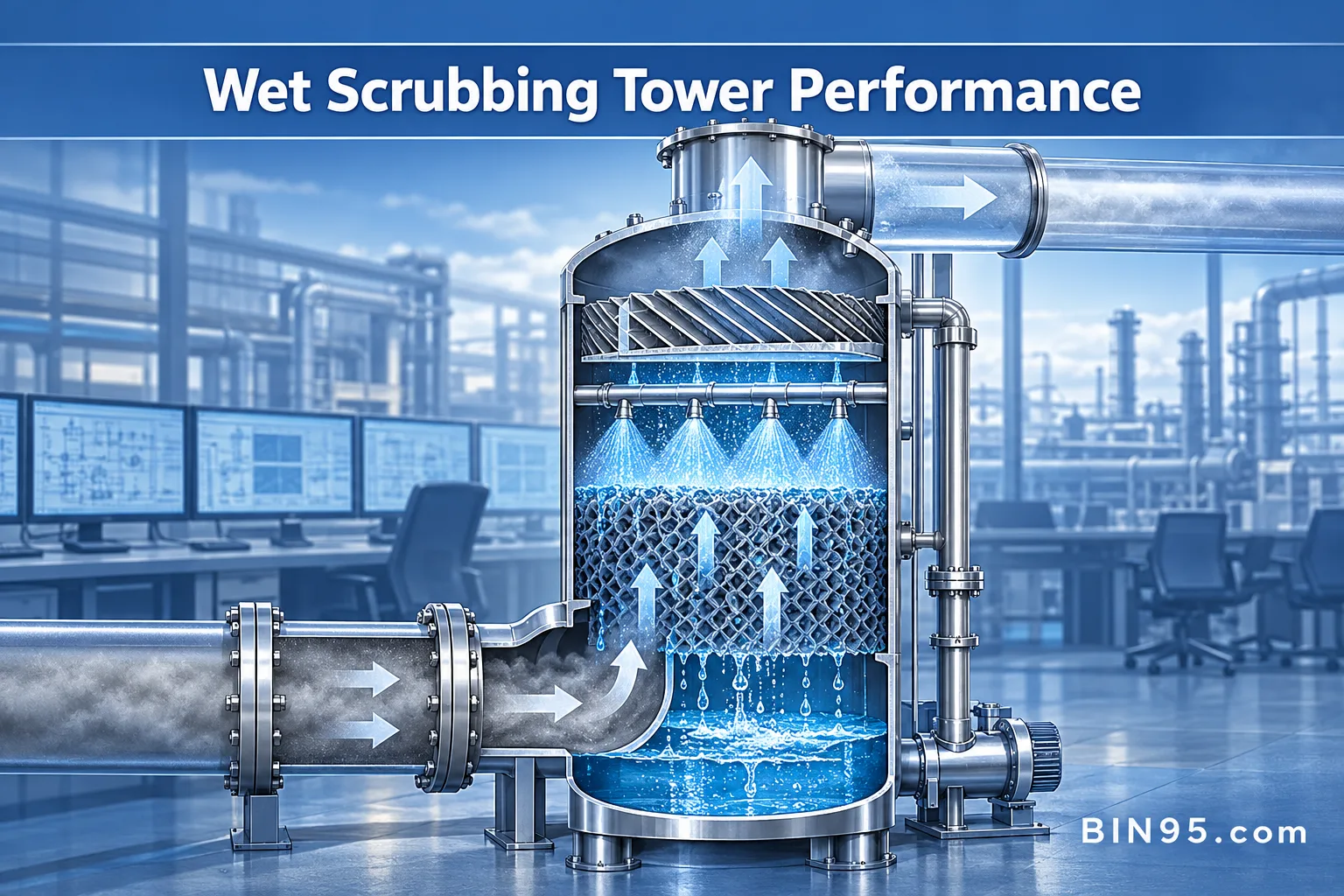
A wet scrubbing tower cleans a gas stream by bringing it into contact with a suitable liquid. A packed tower provides a large wetted surface for gas absorption and, where appropriate, chemical reaction. Good performance requires gas-liquid contact, adequate reagent, and enough time for removal—not simply a pump running and a wet-looking exhaust.
1. Follow Gas and Liquid Through the Tower
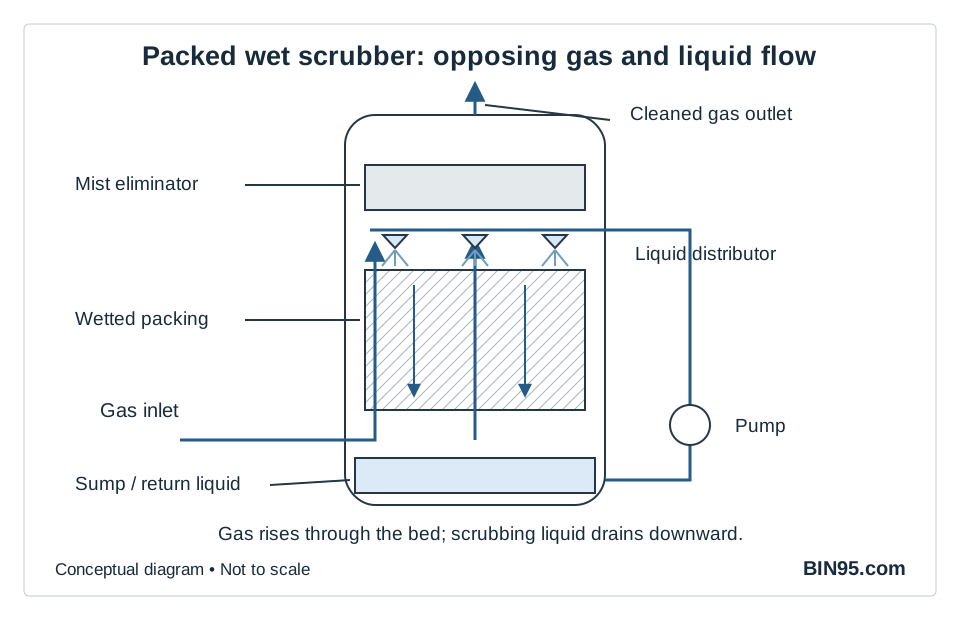
In a countercurrent packed scrubber, contaminated gas enters below the packing and travels upward. Liquid is distributed above the packed bed and flows down across the packing. The large wetted area helps contaminants transfer from the gas into the liquid, where the chosen chemistry may react with them.
A mist eliminator above the contacting section captures entrained liquid droplets before the gas leaves. Captured liquid drains back into the system. The scrubber and mist eliminator have different duties: a mist eliminator is not a substitute for the gas-absorption bed.
Packed scrubbers are particularly useful for appropriate gaseous contaminants. Heavy particulate loading can plug the packing, so the correct collection technology or upstream treatment must be selected for the actual gas stream.
2. Match the Liquid Chemistry to the Contaminant
For an acidic gas, an appropriate alkaline scrubbing solution may provide the required removal. The reagent must remain available at sufficient strength as it is consumed. Monitor the chemistry appropriate to the process; pH may be useful, but it does not describe every reagent system or replace all concentration measurements.
Also consider the material carried out as droplets. A chemically effective scrubbing solution can itself become an unwanted emission if mist control is inadequate. The tower materials, packing, pumps, ducting, and seals must tolerate both the process contaminants and the scrubbing liquid.
3. Verify Performance With the Right Measurements
The original chapter emphasizes sampling the cleaned discharge to confirm the contaminant remaining. Operating measurements are useful for trending, but compliance must be demonstrated by the measurements and methods required for that installation.
| Measurement | What a change may indicate | Interpretation needed |
|---|---|---|
| Outlet contaminant concentration | Actual removal performance has changed | Compare with the required test method and limit |
| Pressure drop across the bed | Plugging, flooding, missing packing, or flow change | Interpret with gas and liquid flow |
| Liquid flow and distribution | Pump, nozzle, blockage, or wetting problem | Confirm coverage across the bed |
| Reagent concentration or relevant chemistry | Consumption, dilution, or dosing fault | Use the process-specific control range |
| Sump level | Drain restriction or liquid imbalance | Prevent gas inlet flooding and process backup |
4. Find Channeling and Packing Problems
Gas can bypass the intended contact area through gaps, missing packing, or poorly wetted sections. Deposits can also force flow through only part of the bed. Both conditions reduce useful contact even if some liquid is visibly circulating.
Inspect spray patterns and distributors during a safe shutdown. Clean or replace blocked nozzles, confirm that packing is supported correctly, and check retaining devices where the design uses them. A sudden gas surge can displace packing or damage internal components.
5. Distinguish Flooding From Mist Carryover
Flooding occurs when liquid cannot drain through the bed or leave the tower fast enough for the gas/liquid load. Pressure drop may rise, liquid can back up, and process gas flow can be restricted. Verify the tower's operating envelope, sump level, drains, and return piping.
Mist carryover may result from excessive gas velocity, poor eliminator condition, blocked drainage, or the wrong liquid distribution. It can deposit corrosive liquid on nearby equipment. Do not assume a visible plume is harmless or diagnose its contents by appearance alone.
6. Ducting, Temperature, and Materials
Fine damp solids can accumulate in inlet ducts and reduce the effective passage. The duct design must provide the required transport conditions and drainage without introducing unacceptable pressure loss. Cleaning methods must suit the residue and construction materials.
A temperature excursion can soften or melt plastic packing and cause a severe blockage. Check temperature limits as well as chemical compatibility. Fans and process-pressure-driven arrangements must maintain safe collection and containment under the actual operating conditions; eliminating a fan is an engineering design decision, not a routine maintenance change.
7. Technician Checklist
- Compare outlet testing and operating trends with the established baseline.
- Confirm gas flow, liquid flow, reagent condition, and sump level.
- Check pressure-drop changes for flooding, fouling, or bypass.
- Inspect distributors, packing, supports, and mist eliminators during planned isolation.
- Correct the cause and verify restored performance with the required measurements.
The packed-bed contact principle also appears in Cooling Tower Design, Operation & Use, although a cooling tower and a chemical scrubber serve different purposes and use different chemistry and performance criteria.
Frequently Asked Questions
How do I know whether a wet scrubber is working?
Use the required outlet contaminant testing and trend relevant operating indicators such as pressure drop, liquid flow, and solution chemistry.
What causes packed scrubber channeling?
Missing or displaced packing, fouling, gaps, and uneven liquid distribution can let gas bypass useful wetted contact area.
Why is liquid leaving the scrubber exhaust?
Possible causes include excessive gas velocity, flooding, damaged or blocked mist eliminators, and poor drainage. Diagnose the gas and liquid conditions together.
Adapted from original work by Mike Sondalini, Maintenance Engineer.
Source and Further Learning
Original ebook section: Is your wet scrubbing tower working?.
- Centrifugal Pump Training and Troubleshooting — Supporting course for scrubber recirculation pumps, pump performance, and troubleshooting.
- Principles of Applied Engineering for Maintenance Personnel — Supporting guidance on materials, protective coatings, corrosion, and fluid flow.
Downloadable Version
Prefer a downloadable version? Get the full 72-page Process & Utilities Plant Essentials PDF below — ideal for employee or student handouts.
 Download right away in a printable PDF format!

$12.50